A trip to Centralia

Centralia watercolors
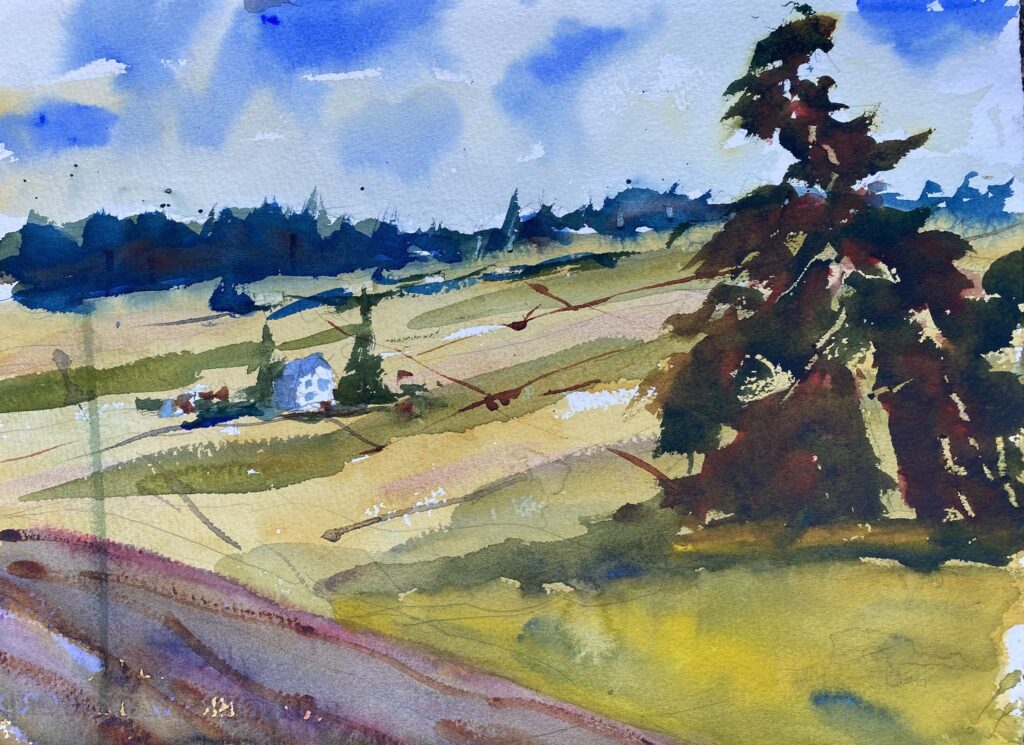
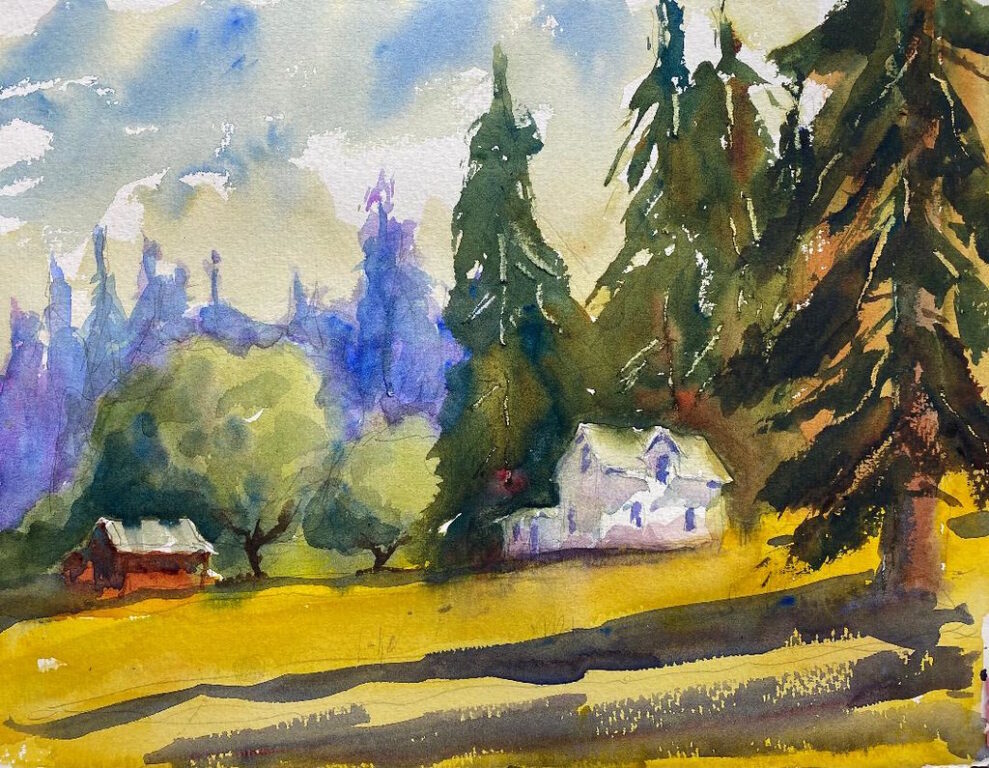
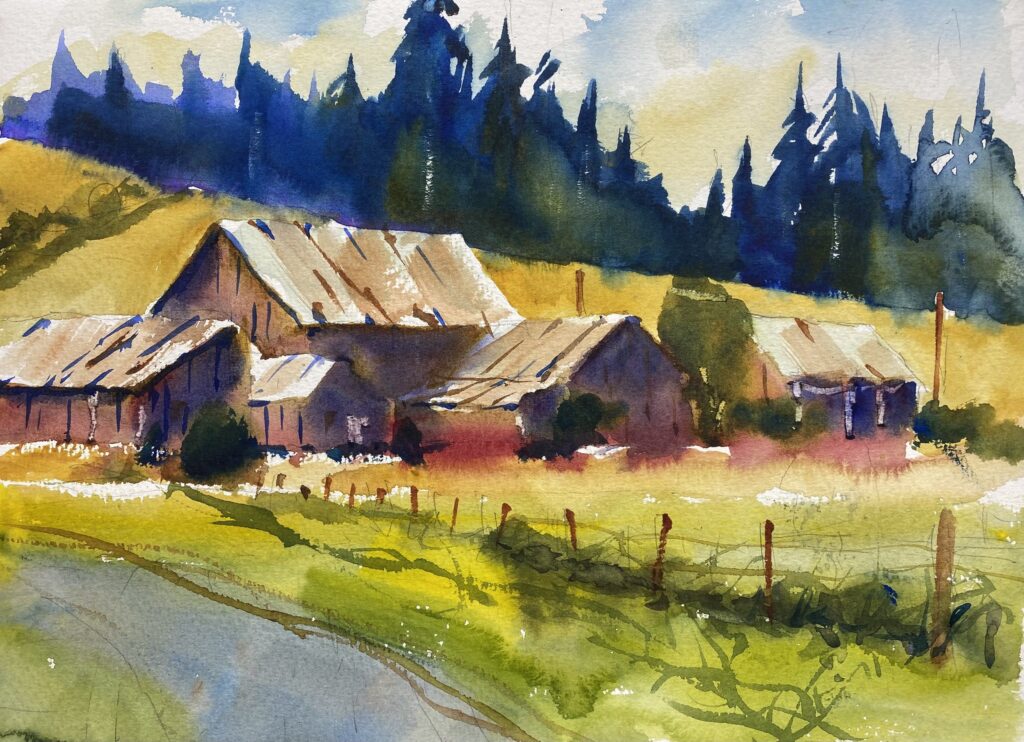
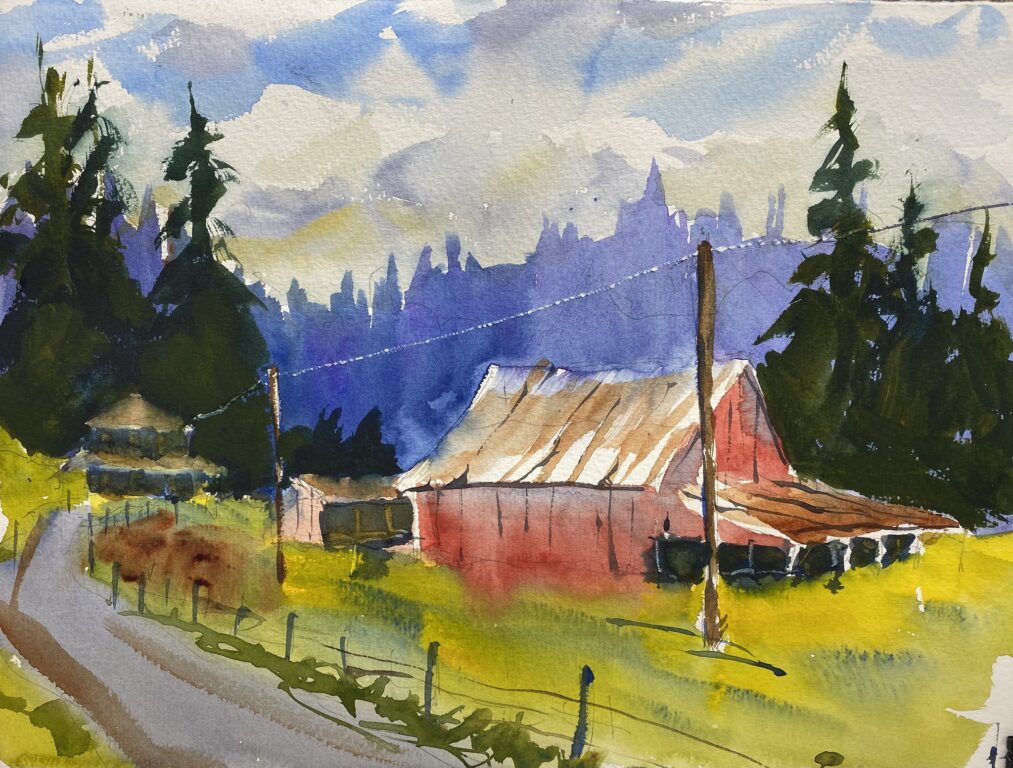
Farm on Alvord Road

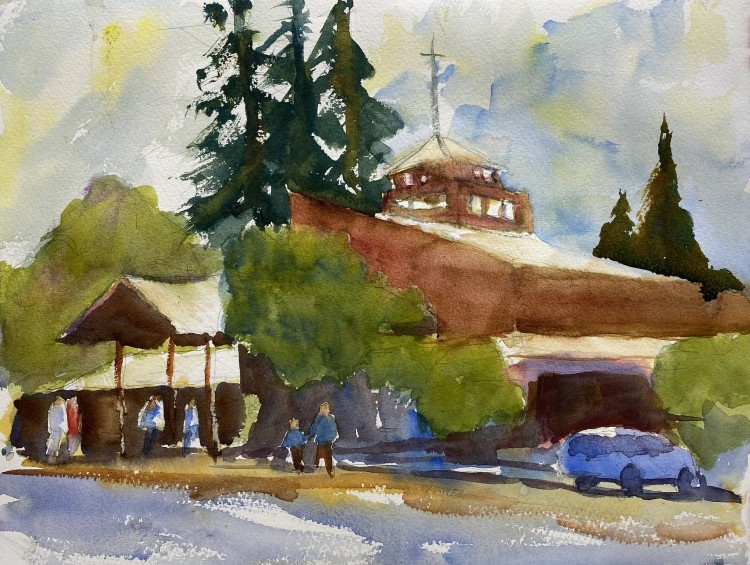
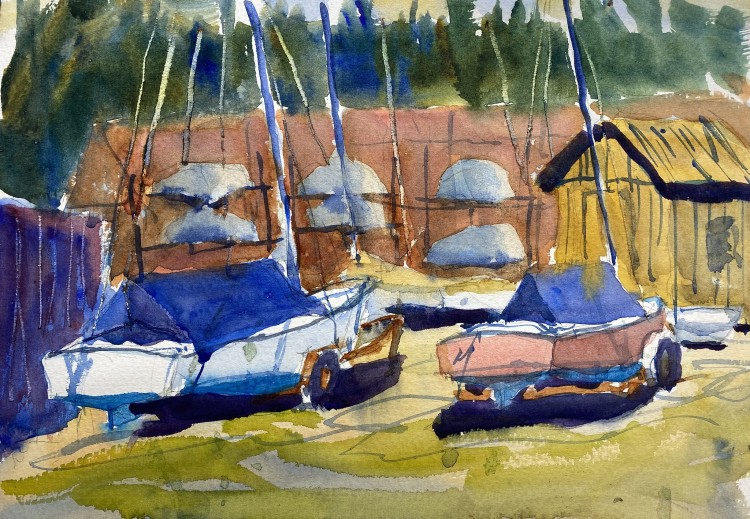
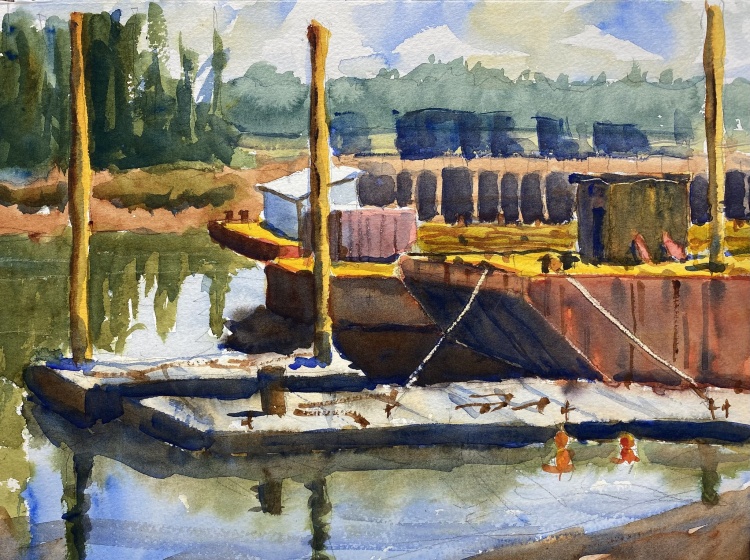
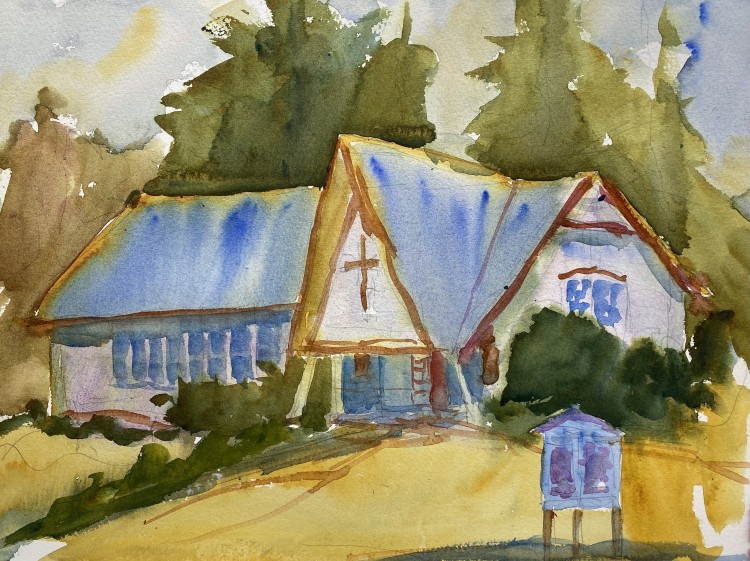
Last Friday and Saturday Katy attended a writer’s workshop in Centralia, WA. I tagged along as her support team, but while she was in her sessions, I explored the surrounding countryside and painted these Centralia watercolors. I found winding valleys of grassy pastures beneath forested ridges, and lots of farms, barns, and sheds to paint. I especially liked the grouping of barns and sheds in the above painting.
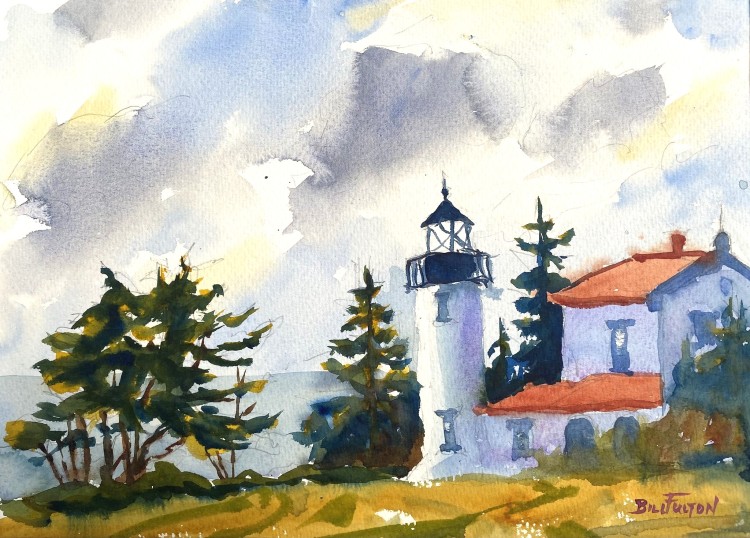
Centralia watercolors

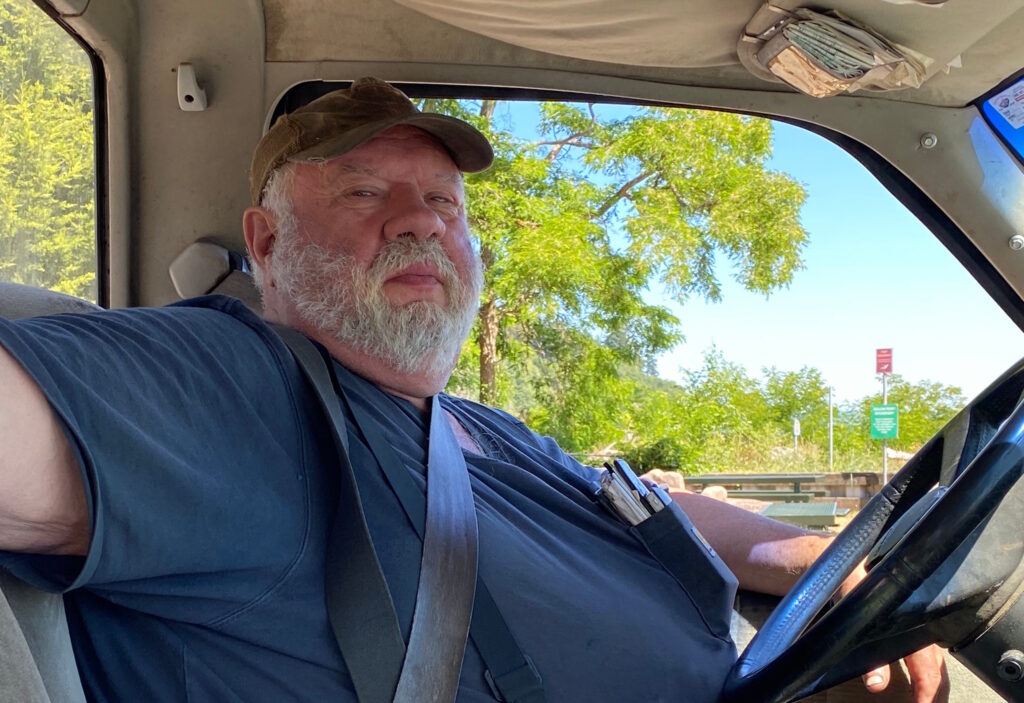
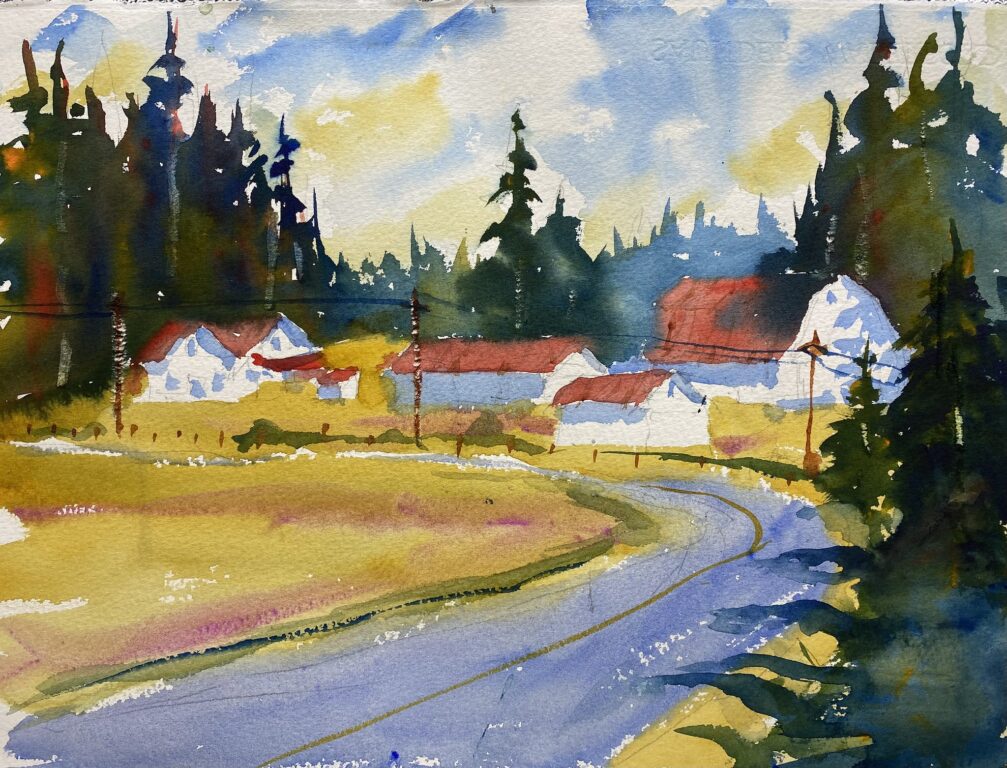
This is the W.O. Willen farm, a historic property on Lincoln Road. I especially like the combination of red roofs and white buildings with shadows. While painting it, a man and his wife stopped in their pickup truck. The man has built hundreds of barns, and now spends his retirement repairing and restoring old barns. I’m glad someone cares for our rural heritage.
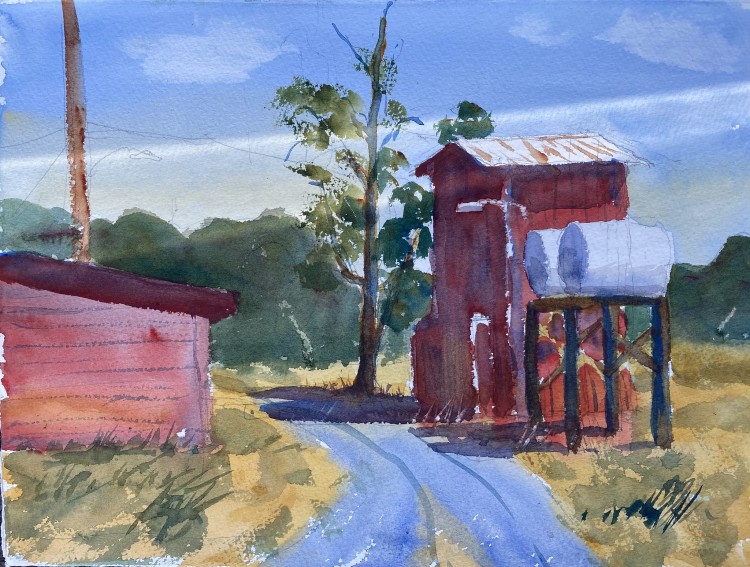
Centralia watercolors
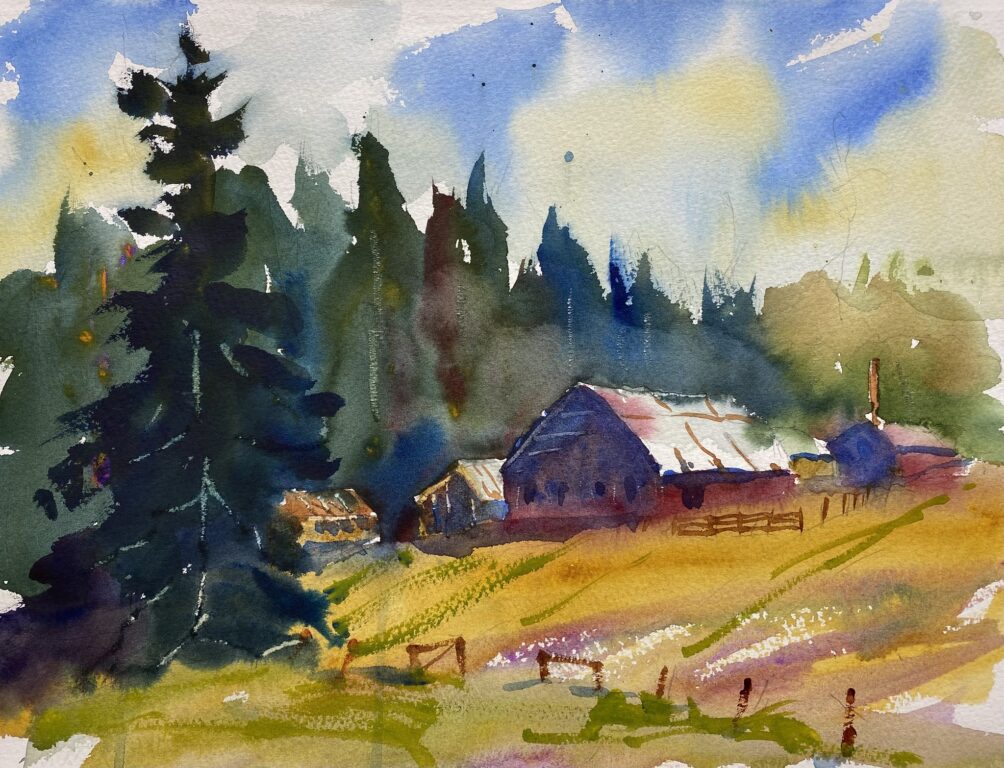
Farm on Teitzel Road

The setting for this farm is stunning. I found it at the end of a winding valley of grassy pastures. There were no other farms around; it was pristine. Before I started painting, I went up to the farmhouse to ask for permission to paint, bu there was no one home. So I set up on the county road. Just as I was finishing, a Sheriff’s Deputy drove up to check me out. He said that someone had called in a suspicious car parked on the road. I showed him my painting and he understood right away what I was doing. He liked the painting, too!
Centralia watercolors
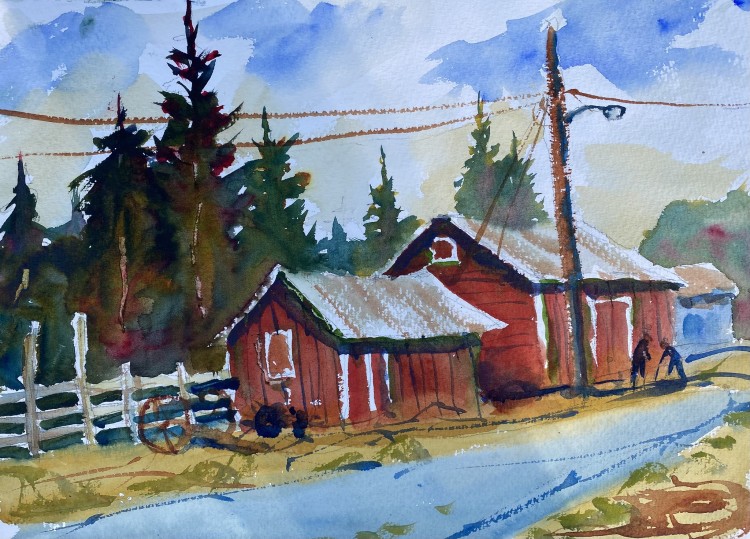
Farm on Shafer Road

I liked this collection of buildings on a hill above Salzer Valley. As I was painting, a small herd of curious goats came out to check me out, bleating as they came. Later a tall young man strolled down the lane to see what I was doing. When he saw I was painting, he was quite friendly.

Katy and I stayed at Centralia Square Grand Hotel, a historic hotel in downtown Centralia, and we ate at McMenamin’s, located in the old Olympic Club. I found Centralia to be a charming small town (as long as you stay off the Interstate exits).

A trip to Centralia Read More »
Portrait painting video

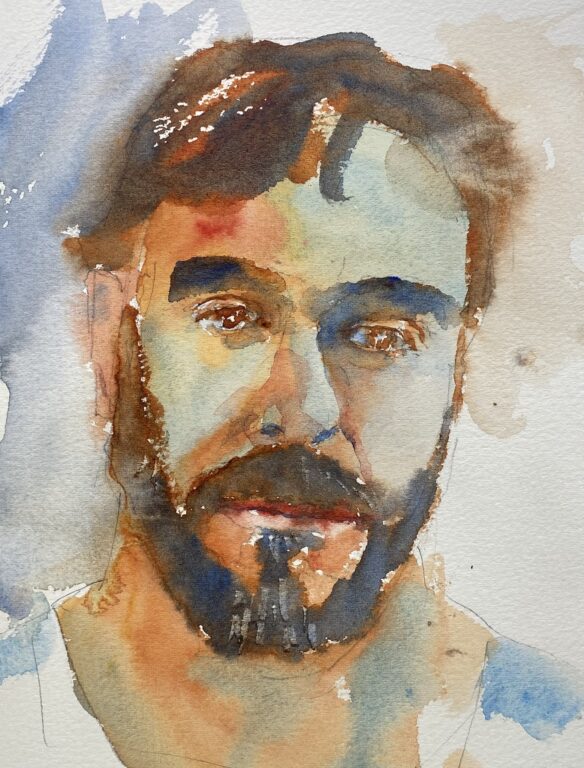
After my week-long plein air competition in Whidbey Island, I was a little burned out on landscape painting, so when I got home, I turned to portrait painting. Here’s a video of a portrait painting session I made recently. I got the reference from an app called Museum (or Sktchy). It provides thousands of photos of users for you to draw or paint and upload to the app. I’ve drawn or painted about 150 portraits for this app.

Here’s the completed image to view.

Portrait painting video Read More »
Honorable Mention at Whidbey Island Plein Air

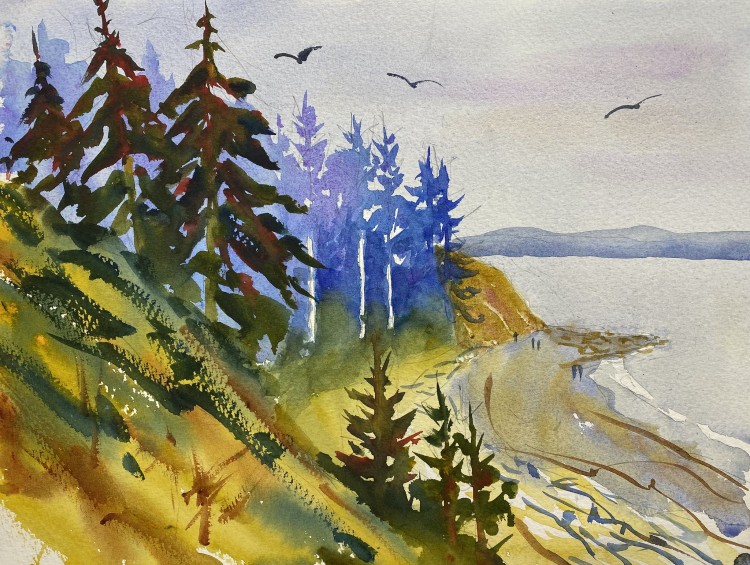
Ebey’s Prairie overlook

Last week this painting earned an Honorable Mention ribbon at the Whidbey Island Plein Air competition. I spent four days painting on Whidbey Island with 50 other artists, ending with an exhibition of our paintings on Thursday night. There were some great paintings there! Whidbey Island is quite picturesque, especially the area near Coupeville where Ebey’s Landing Historical Reserve is located. The Reserve was created to preserve the farmland and farms that were established by the first settlers in the nineteenth century.

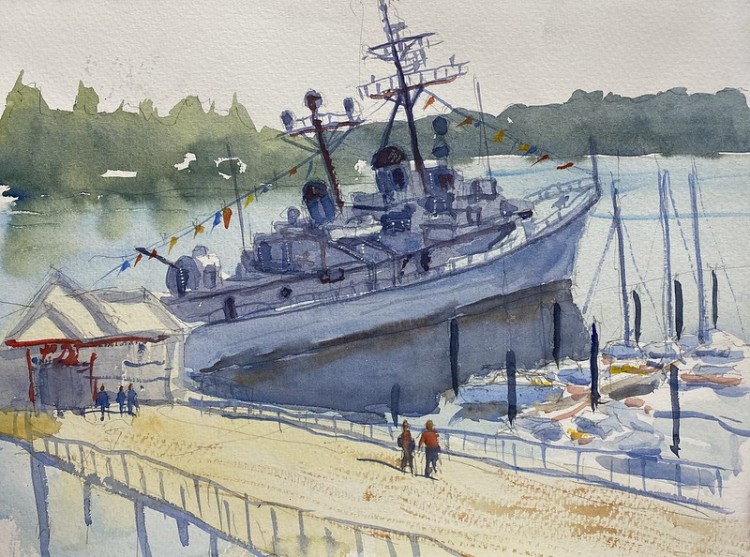
I painted ten paintings over the course of the four days, which is a lot for me. Since this is my third summer at this event, I had a better idea of where to look for subjects, so I didn’t have to drive around as much. It was fun seeing other artists as they painted with me and at two dinners hosted by the organizer, Pacific Northwest Art School. I camped out at Fort Ebey State Park, and enjoyed good weather until Friday, when it rained. Here are some of the paintings I made in addition to the one above.

Honorable Mention at Whidbey Island Plein Air Read More »

Back to the Washington coast

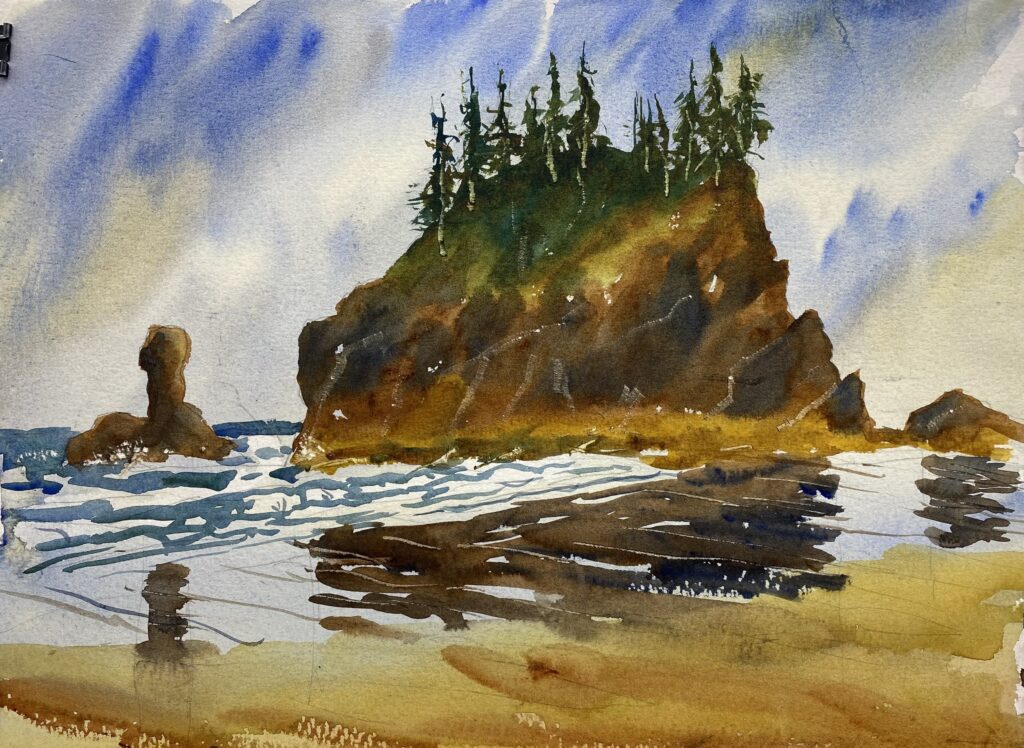
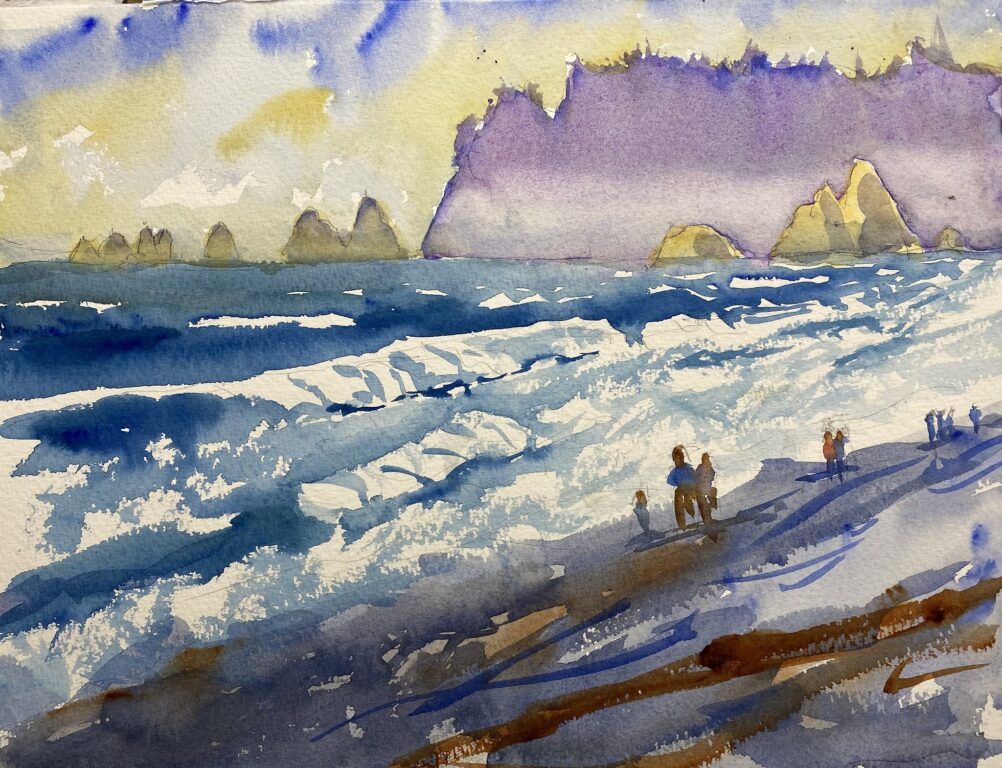
Sea Stack at Second beach

My son Guy and I returned to the Washington coast July 16-18 as I was the facilitator for a Plein Air Washington Artists paintout. As facilitator, I had to organize and publicize the event back in February, which took a flurry of activity. Then at the actual event, I was the on-the-ground coordinator, helping people find the gathering places, answering questions, and facilitating a review at the end of the first two days. We had about 15 people and I think everyone enjoyed the camaraderie and the great painting opportunities.

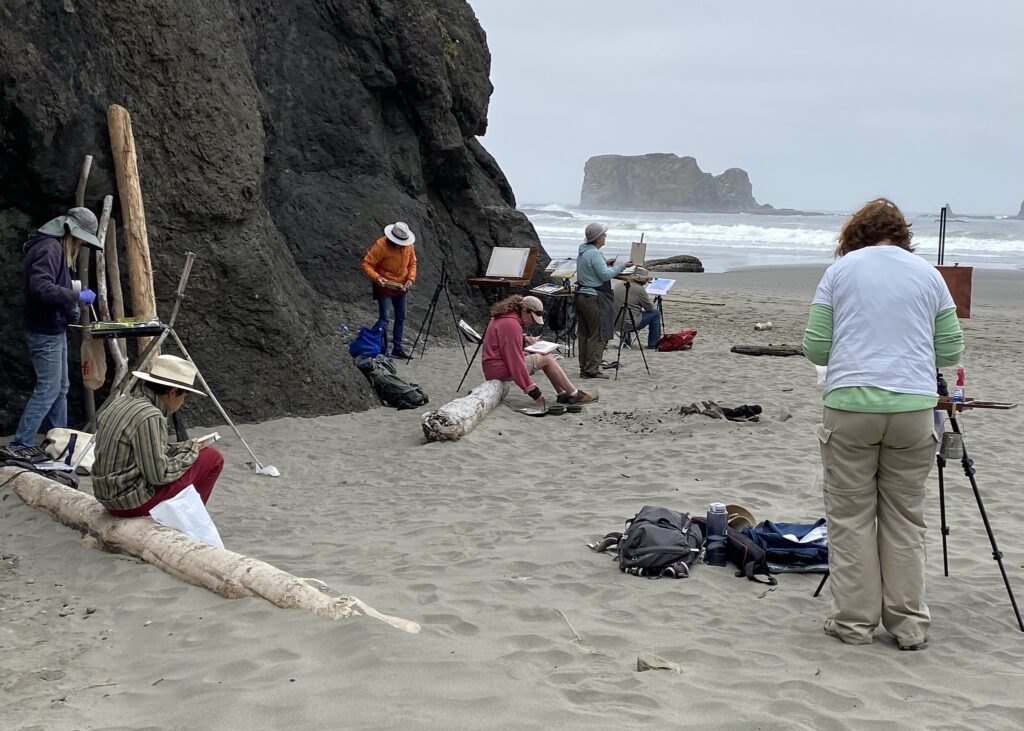
The first day we painted on Rialto Beach with its crashing waves and sea stacks. The second day we hiked .7 miles to Second Beach where we had a variety of islands, outcroppings and beach scenes to paint. On the third day we painted in the harbor at La Push, with its boats, docks, and the offshore islands looming over the harbor. What a great place to paint!

Artists at Second Beach
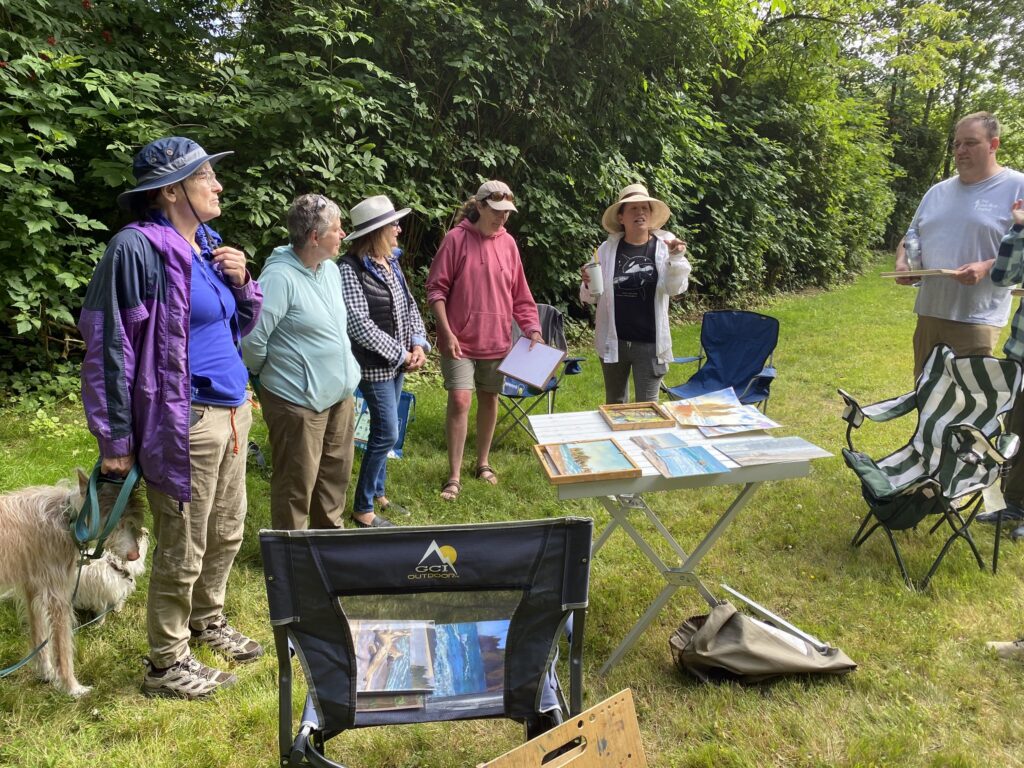
Review at the end of the first day
My painting of Rialto Beach

Back to the Washington coast Read More »

Urban grit in Seattle

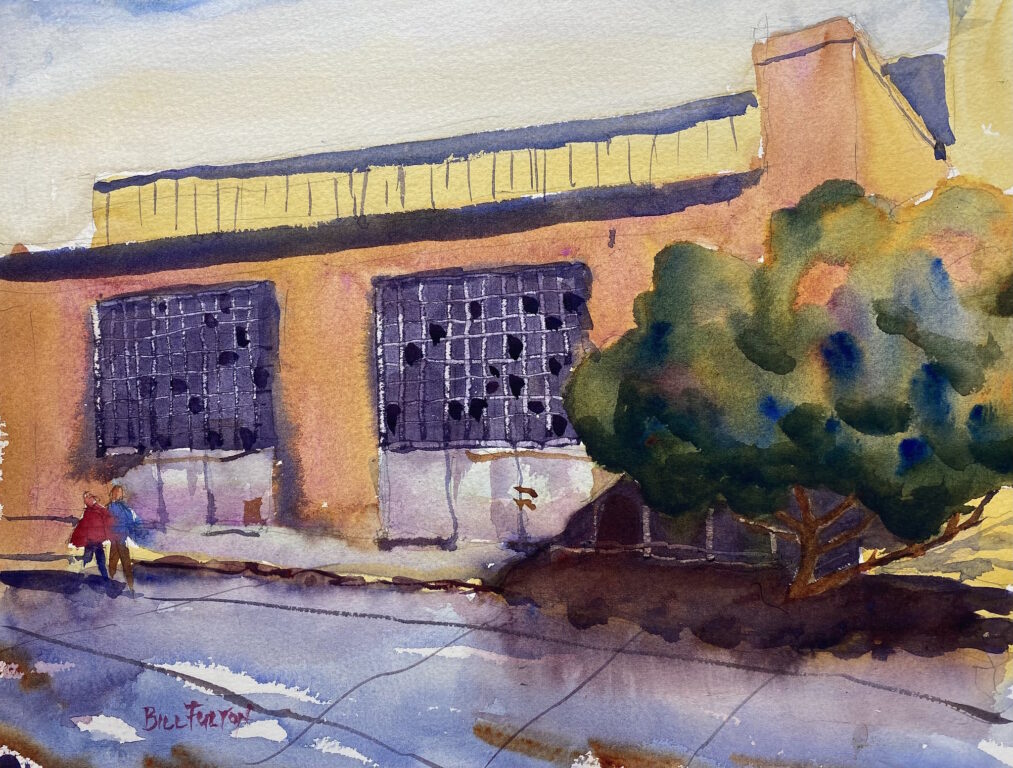
Old Navy hangar at Magnuson Park

On Saturday I attended a paintout sponsored by Magnuson Park Gallery in Seattle. Magnuson Park is a former Navy Air facility that was transferred to the City of Seattle. Most of the buildings and grounds have been re-purposed in imaginative ways, but some of the buildings stand unused and abandoned, like this old Navy hangar.

I liked the grittiness of the scene with the broken windows, so I tried to capture it in a watercolor. I like the color of the walls and the windows, but I struggled to paint the tree and its beautiful shadow. But all in all, I’m pretty satisfied with this painting.

At 3:00 pm, all the artists gathered in the Magnuson Park Gallery to show their work. I especially enjoyed seeing my fellow artists, many of whom I know already, and striking up conversations with those I haven’t met. There were a number of young artists there, and I tried to make encouraging comments on their paintings.

With two ferry crossings and congested driving in Seattle traffic, it was a long day for me, but a rewarding one.

Urban grit in Seattle Read More »

Pristine and forgotten places

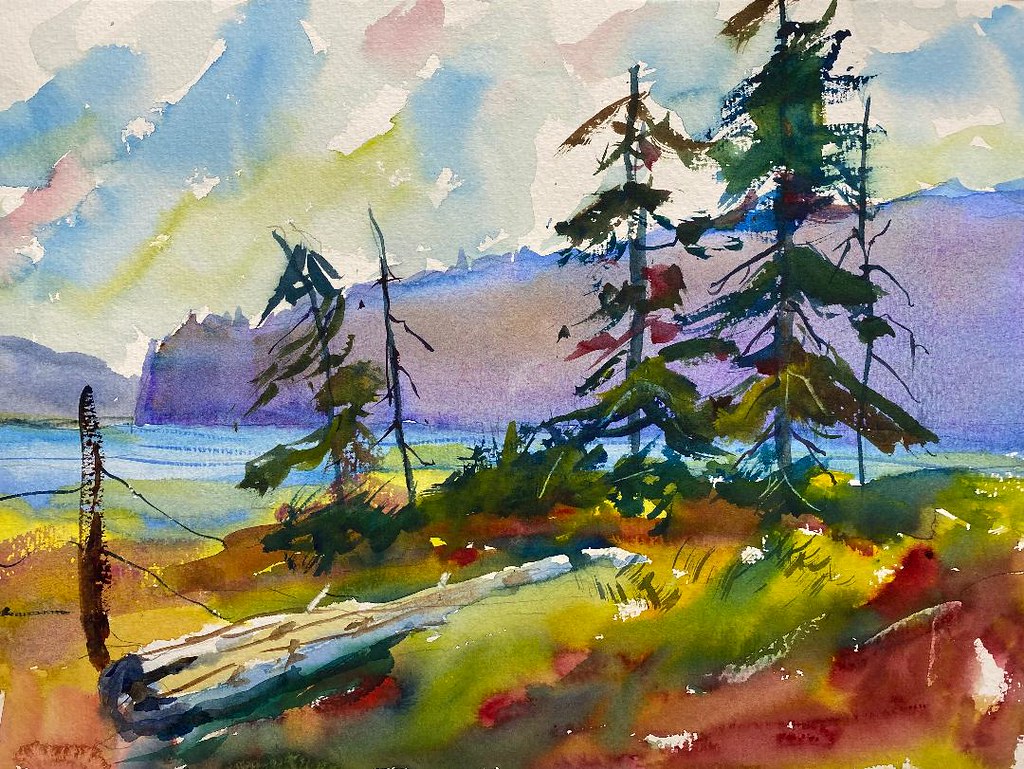
Estuaries are overlooked places. You can’t build there; you can’t put a road there; and you can’t make money off of them. So they’re ignored by most people, which is just fine. They need the wild peace of things so that plants and animals can flourish in them.

That’s why I often seek out estuaries as a place to paint. They’re pristine. Yesterday I was exploring the roads around the head of North Bay near Allyn, when I saw a small turnoff. I drove a bit further, turned around, and came back to discover a small county park. I found a tiny parking lot and a trail through the woods to the estuary. It’s almost invisible and rarely visited, just a perfect place for a watercolor. I waded through the thick grass until I found this island of trees along the shore.

I used intuitive color choices for this painting. Not all these colors are noticeable when you look at the estuary. But by choosing colors by intuition, its possible to bring out colors in the spectrum that we don’t normally see. So even though the colors seem vivid, they also seem in character with the scene.

Pristine and forgotten places Read More »

Eglon farmhouse again

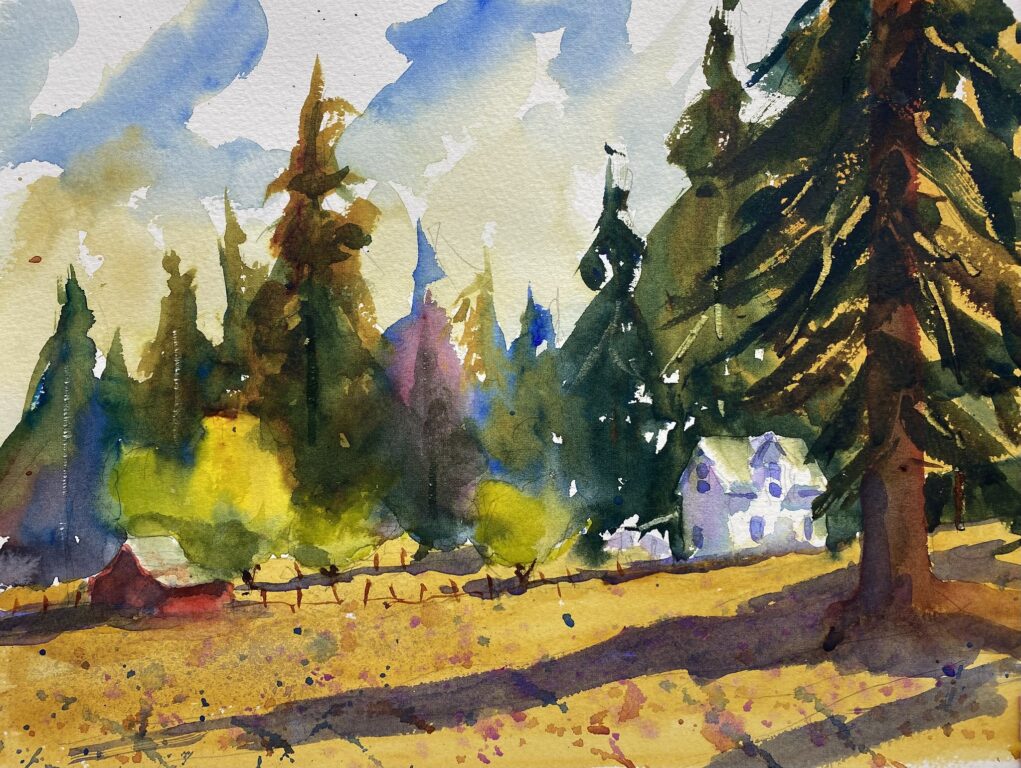
When I posted my painting of the Eglon farmhouse on Eric Wiegardt’s student forum, someone suggested that I paint it again. So I did. I’m much happier with this version. I added more color to the trees and shadows and brought the big lone tree forward. I think it helps.

Eglon farmhouse again Read More »

The weightlessness of memory

Farmhouse in Eglon

I arrived in Eglon early in the morning when long shadows stretched across the roads and pastures, and the air was fresh and cool. Eglon is a rural area defined by a historic schoolhouse, a likewise ancient church, and an organic farm where I saw young farmhands bending over the rows of vegetables. Pastures of grass from old farms accentuate the tall fir trees, and the traffic is slow.

I parked my car in the driveway of the volunteer fire station and explored on foot to find a good composition for my painting. Behind the fire station along a fence row in the woods I peeked out at this scene. I especially liked the long shadows and the two buildings. I set up my easel and started to paint. I feel pretty good about the result, although those blue trees are overworked and the house has a halo around it.

Dennis

After I finished, a large man in an old pickup truck pulled up next to me and introduced himself as Dennis. “I dug the basement of that house many years ago,” he said. “The church owns it now.” He went on to tell me the story of his family, how his grandfather came to this area in 1905. He was an immigrant from Sweden who arrived in America with his two brothers. They went to Montana where one brother died. His grandfather went to work for the railroad that eventually brought him to Edmonds, and Puget Sound reminded him of his home in Sweden. He bought land in Eglon from money he earned working in the sawmills in Edmonds, across the Sound. He would row back and forth while he was clearing the land of the huge stumps left by the loggers, and eventually he built a house, the same house that Dennis has lived in all his life. It was oral history of the best kind, but I was glad to start home for lunch.

The weightlessness of memory Read More »

Bremerton’s Callow Avenue

Callow Avenue in Bremerton

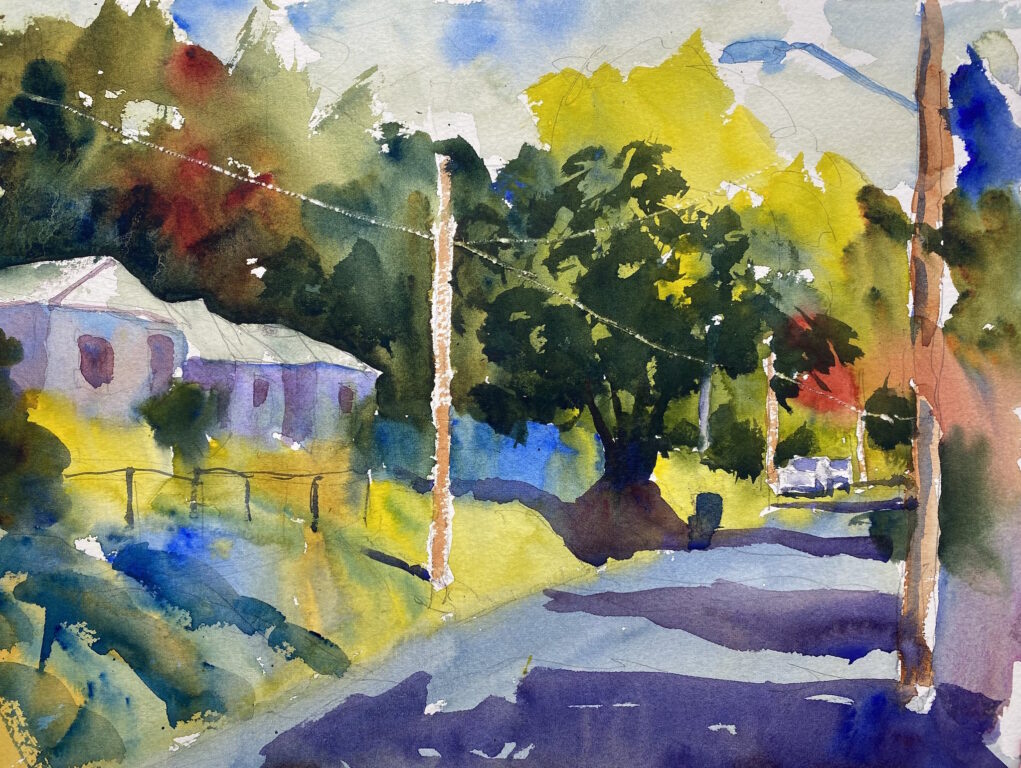
Callow Avenue is Bremerton’s grittiest street. The downtown Callow area is the site of tattoo parlors, pawn shops, a dilapidated theater, and shops in various stages of decay. But a little ways up the avenue I found this street scene early on a summer morning. I liked the tunnel of trees throwing shadows running across the street and the small old houses typical of West Bremerton.

I set up my easel in the shade and started painting in the cool of the morning. A pregnant mom with her five-year-old- daughter passed by, and they came back a little later with groceries in a plastic bag. A mentally ill woman was singing as she wound her zigzag way up to the small grocery store across the street. A tall young guy came up the street and returned with a loaf of bread, a bag of rolls, and a can of pop he was drinking.

I told myself I was just going to make a mess of this painting and not worry about getting it perfect. I started with the tree behind the houses and worked my way down to the street, leaving the white of the paper for the truck and the car. Then I painted the telephone pole and foliage on the right side and put in the street while the washes were still wet. I let it dry, then I painted the foliage of the dark tree in the middle and its shadow. The rest was mostly detail work.

I’m pleased with the general effect of the painting. There’s lots of color and soft edges. The houses and their lawns are simplified. The shadows are good and the telephone poles and electric wires are well done. I like the way they eye is drawn up the street, and the truck and car are nice and loose.

But I think I have too much going on in the tree masses in the upper left. The painting seems too busy. Still, all in all, I’m pretty satisfied with this painting.

Bremerton’s Callow Avenue Read More »

Accumulating brush hours

It’s well-known that success requires perseverance. Malcom Gladstone, in his book, The Tipping Point, said that you need to put in 10,000 hours of practice before you master any discipline. In the art world, this means brush hours… many hours of practice: painting, painting, painting. A certain level of talent is needed, but without brush hours, you’re not going to improve.

So I’ve been trying to get my brush hours in. My goal is to paint at least one watercolor every day. Some days I have too much going on and I just can’t get to it. But most weekdays I’m able to at least get some paint on paper. Not all my efforts are rewarded with a good painting. In fact, most are not up to my expectations. But I believe that I learn something from every painting, even from the failures. As long as I’m getting my brush hours in, I’m satisfied. Lately I’ve been producing a lot of paintings and I’d like to share them with you. Click on an image to see the slide show.

Accumulating brush hours Read More »